Industrial Cleaning Robots for Manufacturing: Complete Automation Guide 2026


Introduction: Why Manufacturing Facilities Are Turning to Cleaning Automation


Modern manufacturing facilities are becoming more automated, connected, and efficiency-driven. While production lines have adopted robotics, AI systems, and smart factory technologies, facility maintenance is often still dependent on manual labor.

However, traditional cleaning methods are becoming increasingly difficult to support modern manufacturing requirements.

Large factories, warehouses, and industrial plants now face several challenges:

  • Rising labor costs and worker shortages
  • Increasing requirements for workplace safety
  • The need for continuous 24/7 production environments
  • Higher cleanliness standards for sensitive industries
  • Difficulty maintaining consistent cleaning quality across large areas

In manufacturing environments, floor cleanliness is not simply a matter of appearance. Dust, oil contamination, metal particles, and foreign object debris (FOD) can affect equipment reliability, employee safety, and production efficiency.

This is why more companies are adopting industrial cleaning robots as part of their smart factory maintenance strategy.

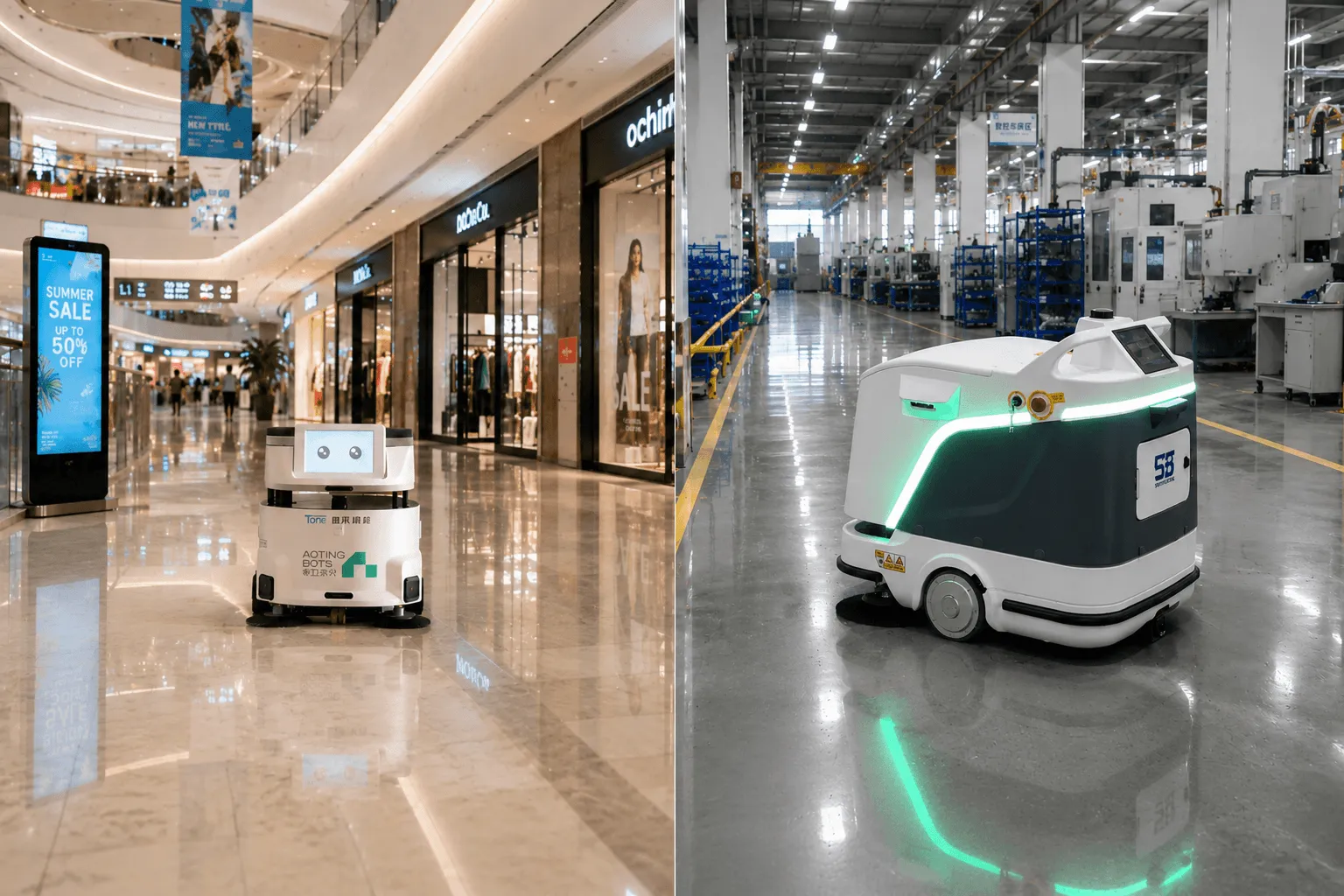
Unlike traditional cleaning machines that require constant human operation, modern autonomous cleaning robots use AI navigation, LiDAR sensors, and intelligent path planning to independently clean large industrial areas. They can operate during production hours, night shifts, or weekends while reducing manual workload.

This guide explains how industrial cleaning robots for manufacturing work, their benefits, applications, ROI considerations, and how factories can select the right robotic cleaning solution.


cleaning automation trends manufacturing


Why Are Manufacturing Facilities Adopting Industrial Cleaning Robots?


1. Reducing Dependence on Manual Cleaning Labor

For many manufacturing companies, cleaning is still a labor-intensive process.

Traditional industrial cleaning usually requires workers to:

  • Operate floor scrubbers manually
  • Follow fixed cleaning schedules
  • Record cleaning activities manually
  • Repeat the same tasks every day

This creates several operational challenges:

  • Increased labor expenses
  • Difficulty recruiting cleaning staff
  • Limited cleaning availability during production hours
  • Inconsistent cleaning results between different operators

An industrial cleaning robot allows factories to automate repetitive cleaning tasks and reduce dependence on manual labor.

Instead of assigning employees to perform routine floor maintenance, companies can use autonomous robots to handle daily cleaning operations while workers focus on more valuable maintenance activities.

2. Supporting 24/7 Smart Manufacturing Operations

Many modern factories operate continuously.

Industries such as:

  • Automotive manufacturing
  • Electronics production
  • Logistics centers
  • Food processing

often require facilities to remain operational around the clock.

Manual cleaning creates limitations because:

  • Cleaning cannot always happen during production
  • Night-shift labor increases costs
  • Large areas are difficult to maintain consistently

Autonomous cleaning robots solve this problem by providing scheduled cleaning operations.

Factories can configure robots to:

  • Clean during low-production periods
  • Follow automatic cleaning schedules
  • Return to charging stations independently
  • Resume cleaning tasks after charging

This makes cleaning automation a natural extension of smart manufacturing.

3. Improving Workplace Safety and Compliance

Factory floors are exposed to many types of contamination, including:

  • Dust accumulation
  • Oil residues
  • Packaging debris
  • Metal particles
  • Production waste

Poor cleaning conditions can increase risks such as:

  • Slip and fall accidents
  • Equipment contamination
  • Production interruptions

Autonomous cleaning robots help maintain more consistent cleaning standards by following predefined routes and collecting operational data.

For industries with strict quality requirements, such as electronics and food manufacturing, automated cleaning records can also support internal audits and compliance management.


What Is an Industrial Cleaning Robot?


An industrial cleaning robot is an autonomous robotic system designed to perform cleaning tasks in factories, warehouses, and commercial industrial environments with minimal human intervention.

Unlike traditional cleaning machines that require operators, industrial cleaning robots combine:

  • Autonomous navigation
  • Artificial intelligence
  • Sensor technology
  • Automatic charging systems
  • Digital monitoring platforms

to complete cleaning tasks independently.

Depending on the application, industrial cleaning robots can perform different functions, including:

  • Floor sweeping
  • Vacuum cleaning
  • Scrubbing
  • Dust removal
  • Industrial floor maintenance

These robots are especially suitable for large facilities where cleaning consistency, efficiency, and operational visibility are important.


How Do Autonomous Cleaning Robots Work?


Modern autonomous cleaning robots rely on multiple technologies to safely operate in complex industrial environments.

1. AI Navigation and SLAM Mapping

One of the most important technologies behind autonomous cleaning robots is SLAM (Simultaneous Localization and Mapping).

SLAM enables robots to:

  • Create digital maps of factory environments
  • Understand their location
  • Plan optimized cleaning routes
  • Adapt to changing surroundings

Traditional cleaning equipment usually follows fixed paths or requires manual operation.

In contrast, a factory cleaning robot using SLAM technology can independently navigate around:

  • Production equipment
  • Storage areas
  • Workers
  • Temporary obstacles

This allows robots to operate effectively in dynamic manufacturing environments.

2. LiDAR and Multi-Sensor Obstacle Detection

Manufacturing facilities are constantly changing.

Forklifts move materials, employees walk through production areas, and equipment locations may change.

To operate safely, industrial cleaning robots use multiple sensors, including:

  • LiDAR scanners
  • 3D cameras
  • Ultrasonic sensors
  • Collision detection systems

These technologies allow robots to:

  • Detect obstacles
  • Adjust routes automatically
  • Avoid collisions
  • Continue cleaning efficiently

This makes autonomous cleaning possible even in busy factory environments.

3. Intelligent Cleaning Path Planning

A major advantage of robotic cleaning systems is optimized route planning.

AI-based software analyzes:

  • Factory layout
  • High-traffic zones
  • Cleaning frequency requirements
  • Floor conditions

The robot can automatically determine:

  • Which areas require more frequent cleaning
  • The most efficient cleaning path
  • When maintenance is required

This improves cleaning efficiency while reducing unnecessary operation time.


Autonomous Cleaning Robots vs Manual Cleaning: Which Is Better?


For manufacturing facilities, the decision is not simply about replacing workers with machines. The goal is to create a more efficient maintenance system.

Comparison Factor Manual Cleaning Autonomous Cleaning Robots
Labor Requirement Requires continuous manpower Requires minimal supervision
Operating Time Limited by worker schedules 24/7 scheduled operation
Cleaning Consistency Depends on operator performance Stable and repeatable
Large Area Coverage Time-consuming Efficient for large facilities
Data Tracking Manual records Digital cleaning reports
Safety Risk Workers exposed to hazards Reduced human exposure


For large factories, warehouses, and industrial facilities, autonomous cleaning robots provide a scalable solution for improving maintenance efficiency.


Applications of Industrial Cleaning Robots Across Manufacturing Industries


Different manufacturing environments have different cleaning requirements. A suitable industrial cleaning robot should not only automate cleaning tasks but also adapt to the specific contaminants, floor conditions, and operational requirements of each industry.

1. Electronics and Semiconductor Manufacturing

Electronics manufacturing facilities require strict control over dust, particles, and contamination.

Even small amounts of dust can affect:

  • Product quality
  • Equipment reliability
  • Production yield
  • Cleanliness standards

For these environments, cleaning robots should focus on:

  • Fine dust removal
  • Consistent cleaning performance
  • Low-particle operation
  • Safe navigation around sensitive equipment

Typical applications include:

  • PCB manufacturing facilities
  • Electronic assembly plants
  • Component production areas
  • Precision manufacturing workshops

Compared with manual cleaning, autonomous cleaning robots provide more consistent cleaning frequency and reduce the risk of human-related contamination.

2. Automotive Manufacturing Facilities

Automotive factories are among the largest users of industrial automation, and facility cleaning is becoming increasingly automated as well.

Automotive plants commonly face:

  • Oil contamination
  • Metal particles
  • Tire marks
  • Heavy dust accumulation

A suitable factory cleaning robot can help maintain:

  • Assembly line cleanliness
  • Worker safety
  • Production area organization
  • Floor condition

Common applications include:

  • Vehicle assembly plants
  • Parts manufacturing facilities
  • Welding workshops
  • Component storage areas

For automotive environments, robots with strong scrubbing capability, large-area coverage, and obstacle avoidance performance are particularly important.

3. Warehouses and Logistics Centers

Modern warehouses often operate continuously with high traffic from:

  • Forklifts
  • AGVs
  • Workers
  • Delivery vehicles

Traditional cleaning methods struggle to maintain large warehouse floors efficiently.

Warehouse cleaning robots help improve:

  • Dust control
  • Floor maintenance
  • Safety conditions
  • Operational efficiency

Key requirements include:

  • Long battery operation
  • Large cleaning coverage
  • Intelligent navigation
  • Automatic charging

For logistics facilities, automation allows cleaning tasks to happen without interrupting material handling operations.

4. Food and Beverage Manufacturing

Food production environments require strict hygiene management.

Cleaning automation can help companies maintain:

  • Sanitary conditions
  • Cleaning consistency
  • Audit readiness

Industrial cleaning robots used in food facilities should consider:

  • Water resistance
  • Easy maintenance
  • Hygiene-friendly design
  • Reliable operation

Automated cleaning systems can support companies in maintaining higher hygiene standards while reducing repetitive manual work.


cleaning automation trends manufacturing


How Much Does an Industrial Cleaning Robot Cost?


One of the most common questions from manufacturers is:

How much does an industrial cleaning robot cost?

The answer depends on several factors, including:

  • Cleaning capacity
  • Factory size
  • Navigation technology
  • Cleaning functions
  • Battery capacity
  • Software features
  • Customization requirements

Industrial cleaning robot costs are usually influenced by the following factors:

1. Cleaning Area Size

The size of the facility directly affects equipment requirements.

A small workshop may only require a compact autonomous cleaning robot.

Large manufacturing plants may need:

  • Higher battery capacity
  • Larger water tanks
  • Greater cleaning efficiency
  • Multiple robot deployment

2. Cleaning Functions

Different cleaning applications require different configurations.

Common functions include:

Cleaning Function Suitable Application
Sweeping Dust and debris removal
Vacuuming Fine particle collection
Scrubbing Oil stains and floor maintenance
Mopping General factory cleaning

Manufacturers should select functions based on actual facility conditions rather than choosing the cheapest option.

3. Navigation and Intelligence Level

Advanced navigation systems may increase initial investment but improve long-term efficiency.

Important technologies include:

  • SLAM navigation
  • LiDAR sensors
  • AI obstacle avoidance
  • Remote monitoring
  • Fleet management systems

For large factories, intelligent navigation can significantly improve operational efficiency.


cleaning automation trends manufacturing


How to Choose the Right Industrial Cleaning Robot for Your Factory?


Selecting the right robotic cleaning solution requires evaluating your factory environment, not just comparing product prices.

1. Evaluate Factory Size and Layout

Consider:

  • Total cleaning area
  • Number of production zones
  • Floor conditions
  • Traffic patterns

Large factories may require robots with:

  • Longer operating time
  • Larger cleaning capacity
  • Multi-robot management capability

2. Define Your Cleaning Requirements

Different problems require different solutions.

Factory Problem Recommended Solution
Dust accumulation Vacuum cleaning robot
Large floor area Sweeping robot
Oil contamination Scrubbing robot
High hygiene requirements Advanced sanitation cleaning system


Why Choose Aotingbot Industrial Cleaning Robot Solutions?


Choosing an industrial cleaning robot supplier is not only about purchasing equipment. Manufacturing companies need a reliable automation partner that understands factory environments, operational challenges, and long-term maintenance requirements.

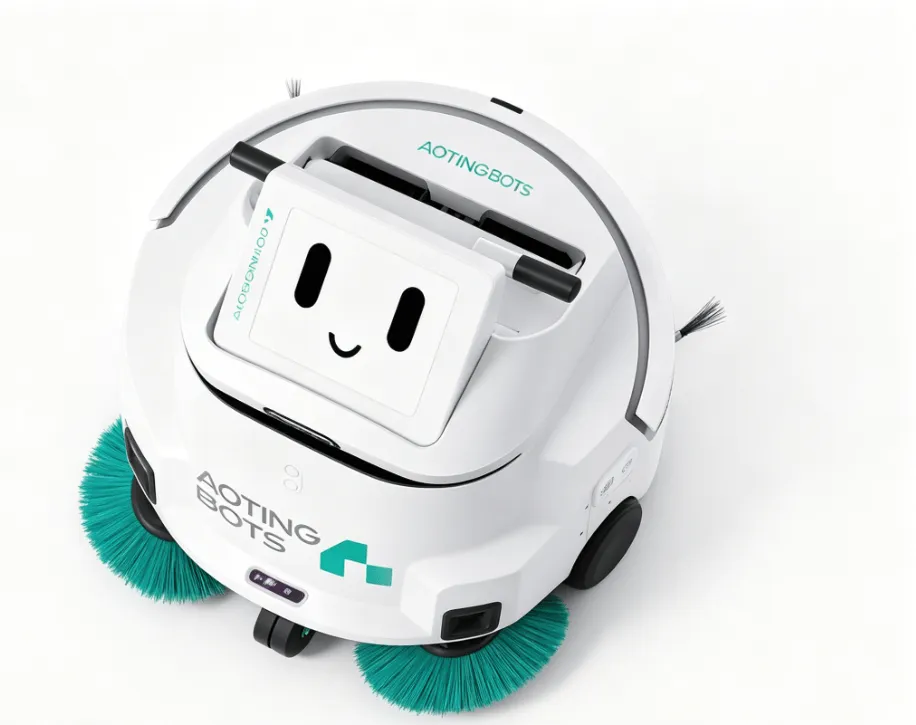
Aotingbot provides autonomous cleaning robot solutions designed for modern industrial facilities, helping manufacturers improve cleaning efficiency, reduce labor dependency, and build smarter maintenance systems.

Aotingbot solutions help factories achieve:

  • Automated floor cleaning operations
  • Reduced manual cleaning workload
  • Consistent cleaning quality
  • Intelligent navigation in complex environments
  • Improved workplace safety
  • Better maintenance visibility

Whether for electronics factories, automotive plants, warehouses, or other industrial facilities, Aotingbot provides robotic cleaning solutions designed to support smart manufacturing goals.

Contact Aotingbot to evaluate the right industrial cleaning robot solution for your facility.


FAQ


What is an industrial cleaning robot?

An industrial cleaning robot is an autonomous machine designed to perform cleaning tasks such as sweeping, vacuuming, and scrubbing in factories, warehouses, and industrial facilities with minimal human operation.

Are cleaning robots suitable for manufacturing factories?

Yes. Modern autonomous cleaning robots are designed for complex industrial environments and can operate around workers, forklifts, and production equipment.

How do autonomous cleaning robots navigate factories?

Most industrial cleaning robots use technologies such as SLAM mapping, LiDAR sensors, cameras, and AI algorithms to create maps, avoid obstacles, and optimize cleaning routes.

How much does an industrial cleaning robot cost?

The cost depends on cleaning capacity, technology features, factory size, and customization requirements. Manufacturers should evaluate total ROI rather than only initial equipment price.

Can cleaning robots operate around forklifts and AGVs?


Yes. Advanced cleaning robots use multi-sensor obstacle detection systems to identify moving objects and adjust routes safely.


Reference Sources


Introduction: Why Manufacturing Facilities Are Turning to Cleaning Automation


Modern manufacturing facilities are becoming more automated, connected, and efficiency-driven. While production lines have adopted robotics, AI systems, and smart factory technologies, facility maintenance is often still dependent on manual labor.

However, traditional cleaning methods are becoming increasingly difficult to support modern manufacturing requirements.

Large factories, warehouses, and industrial plants now face several challenges:

  • Rising labor costs and worker shortages
  • Increasing requirements for workplace safety
  • The need for continuous 24/7 production environments
  • Higher cleanliness standards for sensitive industries
  • Difficulty maintaining consistent cleaning quality across large areas

In manufacturing environments, floor cleanliness is not simply a matter of appearance. Dust, oil contamination, metal particles, and foreign object debris (FOD) can affect equipment reliability, employee safety, and production efficiency.

This is why more companies are adopting industrial cleaning robots as part of their smart factory maintenance strategy.

Unlike traditional cleaning machines that require constant human operation, modern autonomous cleaning robots use AI navigation, LiDAR sensors, and intelligent path planning to independently clean large industrial areas. They can operate during production hours, night shifts, or weekends while reducing manual workload.

This guide explains how industrial cleaning robots for manufacturing work, their benefits, applications, ROI considerations, and how factories can select the right robotic cleaning solution.


cleaning automation trends manufacturing


Why Are Manufacturing Facilities Adopting Industrial Cleaning Robots?


1. Reducing Dependence on Manual Cleaning Labor

For many manufacturing companies, cleaning is still a labor-intensive process.

Traditional industrial cleaning usually requires workers to:

  • Operate floor scrubbers manually
  • Follow fixed cleaning schedules
  • Record cleaning activities manually
  • Repeat the same tasks every day

This creates several operational challenges:

  • Increased labor expenses
  • Difficulty recruiting cleaning staff
  • Limited cleaning availability during production hours
  • Inconsistent cleaning results between different operators

An industrial cleaning robot allows factories to automate repetitive cleaning tasks and reduce dependence on manual labor.

Instead of assigning employees to perform routine floor maintenance, companies can use autonomous robots to handle daily cleaning operations while workers focus on more valuable maintenance activities.

2. Supporting 24/7 Smart Manufacturing Operations

Many modern factories operate continuously.

Industries such as:

  • Automotive manufacturing
  • Electronics production
  • Logistics centers
  • Food processing

often require facilities to remain operational around the clock.

Manual cleaning creates limitations because:

  • Cleaning cannot always happen during production
  • Night-shift labor increases costs
  • Large areas are difficult to maintain consistently

Autonomous cleaning robots solve this problem by providing scheduled cleaning operations.

Factories can configure robots to:

  • Clean during low-production periods
  • Follow automatic cleaning schedules
  • Return to charging stations independently
  • Resume cleaning tasks after charging

This makes cleaning automation a natural extension of smart manufacturing.

3. Improving Workplace Safety and Compliance

Factory floors are exposed to many types of contamination, including:

  • Dust accumulation
  • Oil residues
  • Packaging debris
  • Metal particles
  • Production waste

Poor cleaning conditions can increase risks such as:

  • Slip and fall accidents
  • Equipment contamination
  • Production interruptions

Autonomous cleaning robots help maintain more consistent cleaning standards by following predefined routes and collecting operational data.

For industries with strict quality requirements, such as electronics and food manufacturing, automated cleaning records can also support internal audits and compliance management.


What Is an Industrial Cleaning Robot?


An industrial cleaning robot is an autonomous robotic system designed to perform cleaning tasks in factories, warehouses, and commercial industrial environments with minimal human intervention.

Unlike traditional cleaning machines that require operators, industrial cleaning robots combine:

  • Autonomous navigation
  • Artificial intelligence
  • Sensor technology
  • Automatic charging systems
  • Digital monitoring platforms

to complete cleaning tasks independently.

Depending on the application, industrial cleaning robots can perform different functions, including:

  • Floor sweeping
  • Vacuum cleaning
  • Scrubbing
  • Dust removal
  • Industrial floor maintenance

These robots are especially suitable for large facilities where cleaning consistency, efficiency, and operational visibility are important.


How Do Autonomous Cleaning Robots Work?


Modern autonomous cleaning robots rely on multiple technologies to safely operate in complex industrial environments.

1. AI Navigation and SLAM Mapping

One of the most important technologies behind autonomous cleaning robots is SLAM (Simultaneous Localization and Mapping).

SLAM enables robots to:

  • Create digital maps of factory environments
  • Understand their location
  • Plan optimized cleaning routes
  • Adapt to changing surroundings

Traditional cleaning equipment usually follows fixed paths or requires manual operation.

In contrast, a factory cleaning robot using SLAM technology can independently navigate around:

  • Production equipment
  • Storage areas
  • Workers
  • Temporary obstacles

This allows robots to operate effectively in dynamic manufacturing environments.

2. LiDAR and Multi-Sensor Obstacle Detection

Manufacturing facilities are constantly changing.

Forklifts move materials, employees walk through production areas, and equipment locations may change.

To operate safely, industrial cleaning robots use multiple sensors, including:

  • LiDAR scanners
  • 3D cameras
  • Ultrasonic sensors
  • Collision detection systems

These technologies allow robots to:

  • Detect obstacles
  • Adjust routes automatically
  • Avoid collisions
  • Continue cleaning efficiently

This makes autonomous cleaning possible even in busy factory environments.

3. Intelligent Cleaning Path Planning

A major advantage of robotic cleaning systems is optimized route planning.

AI-based software analyzes:

  • Factory layout
  • High-traffic zones
  • Cleaning frequency requirements
  • Floor conditions

The robot can automatically determine:

  • Which areas require more frequent cleaning
  • The most efficient cleaning path
  • When maintenance is required

This improves cleaning efficiency while reducing unnecessary operation time.


Autonomous Cleaning Robots vs Manual Cleaning: Which Is Better?


For manufacturing facilities, the decision is not simply about replacing workers with machines. The goal is to create a more efficient maintenance system.

Comparison Factor Manual Cleaning Autonomous Cleaning Robots
Labor Requirement Requires continuous manpower Requires minimal supervision
Operating Time Limited by worker schedules 24/7 scheduled operation
Cleaning Consistency Depends on operator performance Stable and repeatable
Large Area Coverage Time-consuming Efficient for large facilities
Data Tracking Manual records Digital cleaning reports
Safety Risk Workers exposed to hazards Reduced human exposure


For large factories, warehouses, and industrial facilities, autonomous cleaning robots provide a scalable solution for improving maintenance efficiency.


Applications of Industrial Cleaning Robots Across Manufacturing Industries


Different manufacturing environments have different cleaning requirements. A suitable industrial cleaning robot should not only automate cleaning tasks but also adapt to the specific contaminants, floor conditions, and operational requirements of each industry.

1. Electronics and Semiconductor Manufacturing

Electronics manufacturing facilities require strict control over dust, particles, and contamination.

Even small amounts of dust can affect:

  • Product quality
  • Equipment reliability
  • Production yield
  • Cleanliness standards

For these environments, cleaning robots should focus on:

  • Fine dust removal
  • Consistent cleaning performance
  • Low-particle operation
  • Safe navigation around sensitive equipment

Typical applications include:

  • PCB manufacturing facilities
  • Electronic assembly plants
  • Component production areas
  • Precision manufacturing workshops

Compared with manual cleaning, autonomous cleaning robots provide more consistent cleaning frequency and reduce the risk of human-related contamination.

2. Automotive Manufacturing Facilities

Automotive factories are among the largest users of industrial automation, and facility cleaning is becoming increasingly automated as well.

Automotive plants commonly face:

  • Oil contamination
  • Metal particles
  • Tire marks
  • Heavy dust accumulation

A suitable factory cleaning robot can help maintain:

  • Assembly line cleanliness
  • Worker safety
  • Production area organization
  • Floor condition

Common applications include:

  • Vehicle assembly plants
  • Parts manufacturing facilities
  • Welding workshops
  • Component storage areas

For automotive environments, robots with strong scrubbing capability, large-area coverage, and obstacle avoidance performance are particularly important.

3. Warehouses and Logistics Centers

Modern warehouses often operate continuously with high traffic from:

  • Forklifts
  • AGVs
  • Workers
  • Delivery vehicles

Traditional cleaning methods struggle to maintain large warehouse floors efficiently.

Warehouse cleaning robots help improve:

  • Dust control
  • Floor maintenance
  • Safety conditions
  • Operational efficiency

Key requirements include:

  • Long battery operation
  • Large cleaning coverage
  • Intelligent navigation
  • Automatic charging

For logistics facilities, automation allows cleaning tasks to happen without interrupting material handling operations.

4. Food and Beverage Manufacturing

Food production environments require strict hygiene management.

Cleaning automation can help companies maintain:

  • Sanitary conditions
  • Cleaning consistency
  • Audit readiness

Industrial cleaning robots used in food facilities should consider:

  • Water resistance
  • Easy maintenance
  • Hygiene-friendly design
  • Reliable operation

Automated cleaning systems can support companies in maintaining higher hygiene standards while reducing repetitive manual work.


cleaning automation trends manufacturing


How Much Does an Industrial Cleaning Robot Cost?


One of the most common questions from manufacturers is:

How much does an industrial cleaning robot cost?

The answer depends on several factors, including:

  • Cleaning capacity
  • Factory size
  • Navigation technology
  • Cleaning functions
  • Battery capacity
  • Software features
  • Customization requirements

Industrial cleaning robot costs are usually influenced by the following factors:

1. Cleaning Area Size

The size of the facility directly affects equipment requirements.

A small workshop may only require a compact autonomous cleaning robot.

Large manufacturing plants may need:

  • Higher battery capacity
  • Larger water tanks
  • Greater cleaning efficiency
  • Multiple robot deployment

2. Cleaning Functions

Different cleaning applications require different configurations.

Common functions include:

Cleaning Function Suitable Application
Sweeping Dust and debris removal
Vacuuming Fine particle collection
Scrubbing Oil stains and floor maintenance
Mopping General factory cleaning

Manufacturers should select functions based on actual facility conditions rather than choosing the cheapest option.

3. Navigation and Intelligence Level

Advanced navigation systems may increase initial investment but improve long-term efficiency.

Important technologies include:

  • SLAM navigation
  • LiDAR sensors
  • AI obstacle avoidance
  • Remote monitoring
  • Fleet management systems

For large factories, intelligent navigation can significantly improve operational efficiency.


cleaning automation trends manufacturing


How to Choose the Right Industrial Cleaning Robot for Your Factory?


Selecting the right robotic cleaning solution requires evaluating your factory environment, not just comparing product prices.

1. Evaluate Factory Size and Layout

Consider:

  • Total cleaning area
  • Number of production zones
  • Floor conditions
  • Traffic patterns

Large factories may require robots with:

  • Longer operating time
  • Larger cleaning capacity
  • Multi-robot management capability

2. Define Your Cleaning Requirements

Different problems require different solutions.

Factory Problem Recommended Solution
Dust accumulation Vacuum cleaning robot
Large floor area Sweeping robot
Oil contamination Scrubbing robot
High hygiene requirements Advanced sanitation cleaning system


Why Choose Aotingbot Industrial Cleaning Robot Solutions?


Choosing an industrial cleaning robot supplier is not only about purchasing equipment. Manufacturing companies need a reliable automation partner that understands factory environments, operational challenges, and long-term maintenance requirements.

Aotingbot provides autonomous cleaning robot solutions designed for modern industrial facilities, helping manufacturers improve cleaning efficiency, reduce labor dependency, and build smarter maintenance systems.

Aotingbot solutions help factories achieve:

  • Automated floor cleaning operations
  • Reduced manual cleaning workload
  • Consistent cleaning quality
  • Intelligent navigation in complex environments
  • Improved workplace safety
  • Better maintenance visibility

Whether for electronics factories, automotive plants, warehouses, or other industrial facilities, Aotingbot provides robotic cleaning solutions designed to support smart manufacturing goals.

Contact Aotingbot to evaluate the right industrial cleaning robot solution for your facility.


FAQ


What is an industrial cleaning robot?

An industrial cleaning robot is an autonomous machine designed to perform cleaning tasks such as sweeping, vacuuming, and scrubbing in factories, warehouses, and industrial facilities with minimal human operation.

Are cleaning robots suitable for manufacturing factories?

Yes. Modern autonomous cleaning robots are designed for complex industrial environments and can operate around workers, forklifts, and production equipment.

How do autonomous cleaning robots navigate factories?

Most industrial cleaning robots use technologies such as SLAM mapping, LiDAR sensors, cameras, and AI algorithms to create maps, avoid obstacles, and optimize cleaning routes.

How much does an industrial cleaning robot cost?

The cost depends on cleaning capacity, technology features, factory size, and customization requirements. Manufacturers should evaluate total ROI rather than only initial equipment price.

Can cleaning robots operate around forklifts and AGVs?


Yes. Advanced cleaning robots use multi-sensor obstacle detection systems to identify moving objects and adjust routes safely.


Reference Sources


문의하기

이름
*
이메일
*
핸드폰
  • 앙골라+244
  • 아프가니스탄+93
  • 알바니아+355
  • 알제리+213
  • 안도라+376
  • 앵귈라+1264
  • 앤티가 바부다+1268
  • 아르헨티나+54
  • 아르메니아+374
  • 승천+247
  • 호주+61
  • 오스트리아+43
  • 아제르바이잔+994
  • 바하마+1242
  • 바레인+973
  • 방글라데시+880
  • 바베이도스+1246
  • 벨라루스+375
  • 벨기에+32
  • 벨리즈+501
  • 베냉+229
  • 버뮤다 제도+1441
  • 볼리비아+591
  • 보츠와나+267
  • 브라질+55
  • 브루나이+673
  • 불가리아+359
  • 부르키나+파소+226
  • 버마+95
  • 부룬디+257
  • 카메룬+237
  • 캐나다+1
  • 케이맨 제도+1345
  • 중앙아프리카공화국+236
  • 차드+235
  • 칠레+56
  • 중국+86
  • 콜롬비아+57
  • 콩고+242
  • 쿡섬.+682
  • 코스타리카+506
  • 쿠바+53
  • 키프로스+357
  • 체코공화국+420
  • 덴마크+45
  • 지부티+253
  • 도미니카 공화국+1890
  • 에콰도르+593
  • 이집트+20
  • EI 살바도르+503
  • 에스토니아+372
  • 에티오피아+251
  • 피지+679
  • 핀란드+358
  • 프랑스+33
  • 프랑스령 기아나+594
  • 가봉+241
  • 감비아+220
  • 조지아+995
  • 독일+49
  • 가나+233
  • 지브롤터+350
  • 그리스+30
  • 그레나다+1809
  • 괌+1671
  • 과테말라+502
  • 기니+224
  • 가이아나+592
  • 아이티+509
  • 온두라스+504
  • 홍콩+852
  • 헝가리+36
  • 아이슬란드+354
  • 인도+91
  • 인도네시아+62
  • 이란+98
  • 이라크+964
  • 아일랜드+353
  • 이스라엘+972
  • 이탈리아+39
  • 코트디부아르+225
  • 자메이카+1876
  • 일본+81
  • 요르단+962
  • 캄푸치아(캄보디아)+855
  • 카자흐스탄+327
  • 케냐+254
  • 한국+82
  • 쿠웨이트+965
  • 키르기스스탄+331
  • 라오스+856
  • 라트비아+371
  • 레바논+961
  • 레소토+266
  • 라이베리아+231
  • 리비아+218
  • 리히텐슈타인+423
  • 리투아니아+370
  • 룩셈부르크+352
  • 마카오+853
  • 마다가스카르+261
  • 말라위+265
  • 말레이시아+60
  • 몰디브+960
  • 말리+223
  • 몰타+356
  • 마리아나 Is+1670
  • 마르티니크+596
  • 모리셔스+230
  • 멕시코+52
  • 몰도바 공화국+373
  • 모나코+377
  • 몽골+976
  • 몬세라트 섬+1664
  • 모로코+212
  • 모잠비크+258
  • 나미비아+264
  • 나우루+674
  • 네팔+977
  • 네덜란드령 안틸레스+599
  • 네덜란드+31
  • 뉴질랜드+64
  • 니카라과+505
  • 니제르+227
  • 나이지리아+234
  • 북한+850
  • 노르웨이+47
  • 오만+968
  • 파키스탄+92
  • 파나마+507
  • 파푸아뉴쿠니+675
  • 파라과이+595
  • 페루+51
  • 필리핀+63
  • 폴란드+48
  • 프랑스령 폴리네시아+689
  • 포르투갈+351
  • 푸에르토리코+1787
  • 카타르+974
  • 재회+262
  • 루마니아+40
  • 러시아+7
  • 세인트루에이아+1758
  • 세인트빈센트+1784
  • 사모아 동부+684
  • 사모아 서부+685
  • 산마리노+378
  • 상투메 프린시페+239
  • 사우디아라비아+966
  • 세네갈+221
  • 세이셸+248
  • 시에라리온+232
  • 싱가포르+65
  • 슬로바키아+421
  • 슬로베니아+386
  • 솔로몬은+677
  • 소말리아+252
  • 남아프리카공화국+27
  • 스페인+34
  • 스리랑카+94
  • 세인트루시아+1758
  • 세인트빈센트+1784
  • 수단+249
  • 수리남+597
  • 스와질란드+268
  • 스웨덴+46
  • 스위스+41
  • 시리아+963
  • 대만+886
  • 타지크스탄+992
  • 탄자니아+255
  • 태국+66
  • 토고+228
  • 통가+676
  • 트리니다드 토바고+1809
  • 튀니지+216
  • 터키+90
  • 투르크메니스탄+993
  • 우간다+256
  • 우크라이나+380
  • 아랍에미리트+971
  • 영국+44
  • 미국+1
  • 우루과이+598
  • 우즈베키스탄+233
  • 베네수엘라+58
  • 베트남+84
  • 예멘+967
  • 유고슬라비아+381
  • 짐바브웨+263
  • 자이르+243
  • 잠비아+260
*
회사
*
메세지
*